
Service details kept from the older live page
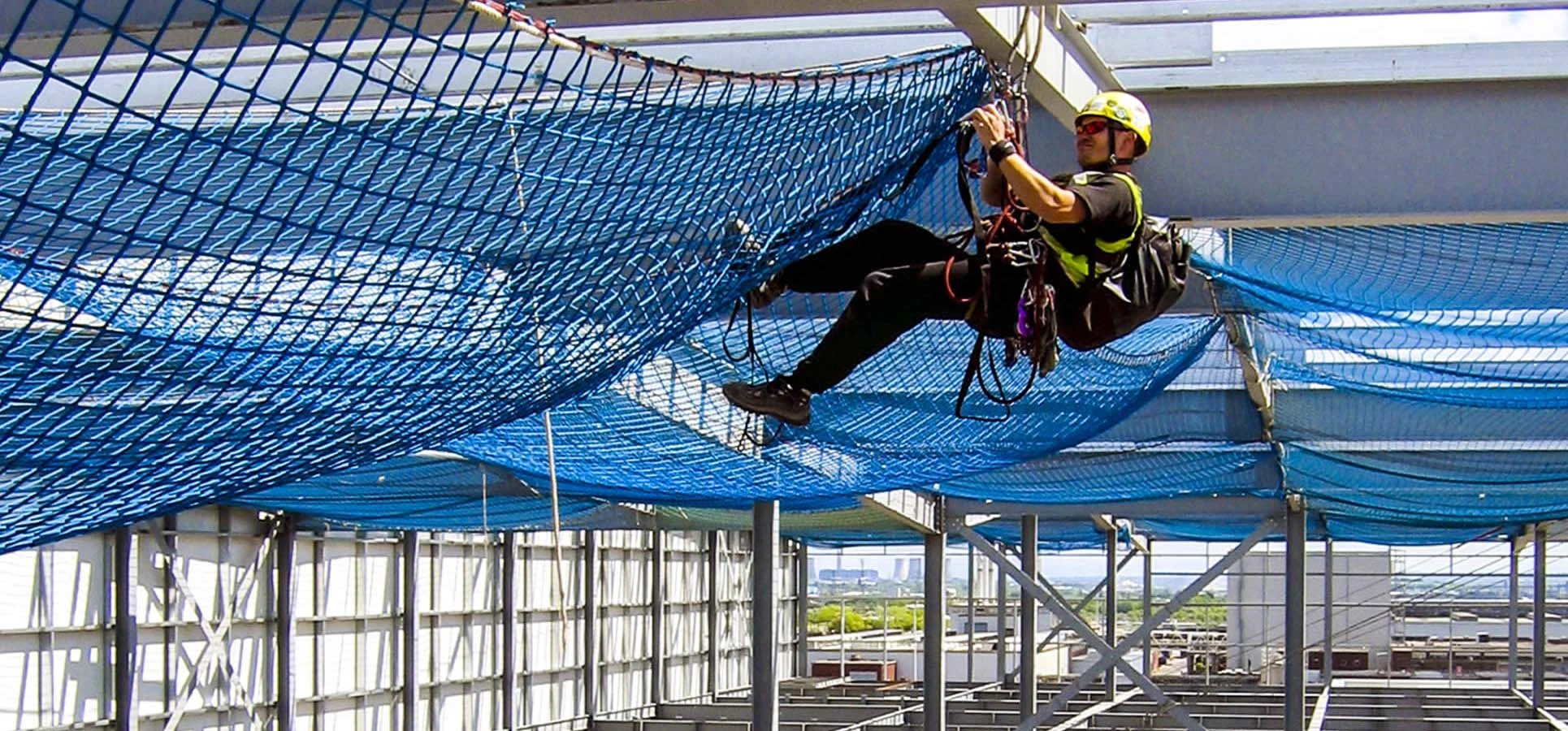
Industrial safety nets are used in larger workspaces where movement, stored goods and equipment need practical separation or protection.
For Hyderabad warehouses and small factories, we check span, anchor points, movement paths and loading activity before deciding net coverage.
Newer notes below add clearer measurements, price factors, photos to send and aftercare, while this section keeps the earlier wording that customers may already recognise.
Industrial safety nets are used in warehouses, factories, sheds, loading bays, mezzanine areas, rack-side zones and work platforms where open edges, material movement or height exposure need controlled protection. In these spaces, the net is not decorative. It has to suit workflow, equipment movement, working height, anchor strength and inspection access.
Hyderabad industrial sites often have practical problems that are different from residential safety net work. A warehouse may need rack-side protection where stored material is handled every day. A factory may need netting around a work platform, maintenance area or shed opening. A loading bay may need a barrier-style net that does not block trucks or forklifts. A commercial building may need temporary netting during repair or maintenance work.
Before suggesting material or fixing, we check the real purpose of the net: worker-side safety, material fall control, rack separation, bird entry control, shed opening closure, loading-bay protection or temporary maintenance support. The same word, industrial net, can mean several different jobs. A useful quote should identify the exact risk and the exact area covered.
Where industrial safety nets are commonly used
- Warehouses, storage racks, dispatch zones and loading bays.
- Factories, workshops, production floors and maintenance platforms.
- Shed openings, mezzanine edges, service walkways and roof-side areas.
- Commercial buildings, schools, hospitals and facilities with plant-room or service areas.
- Temporary protection during repair, painting, facade or maintenance work.
What we check before installation
The first check is daily movement. Forklifts, trolleys, workers, stored goods, doors, shutters, cranes, ladders and maintenance paths may all pass near the proposed net line. A net that blocks the workflow will not last. A net that leaves the real risk uncovered will not help.
We also check fixing points. Industrial netting may need support from steel members, RCC beams, frames, walls, columns or approved anchor points. Weak sheet edges, temporary pipes or loose cladding should not be treated as main support. If welding, hot work, heavy machinery or sharp material movement happens nearby, that should be discussed before choosing material and location.
What makes industrial net work useful
- The net covers the actual risk area, not just the easiest span.
- Worker movement, forklifts, racks, doors and loading activity remain practical.
- Anchor points are checked before the final support line is chosen.
- Inspection, cleaning and future maintenance access remain possible.
- The quote mentions material, height, access, timing and exclusions clearly.
Industrial areas we serve around Hyderabad
Industrial safety net enquiries usually come from Balanagar, Jeedimetla, Nacharam, Cherlapally, Uppal, Patancheru, Medchal, Kompally, Shamshabad, Kattedan, Moula Ali and nearby warehouse or workshop belts. We also handle commercial and institutional sites across Hyderabad where service areas, plant rooms, loading sections or maintenance edges need netting.
For the first discussion, describe the job as specifically as possible: rack-side net, loading-bay net, shed-opening net, work-platform net, mezzanine safety net, material fall protection net or temporary maintenance net. That description helps us choose the right questions before site measurement.


