
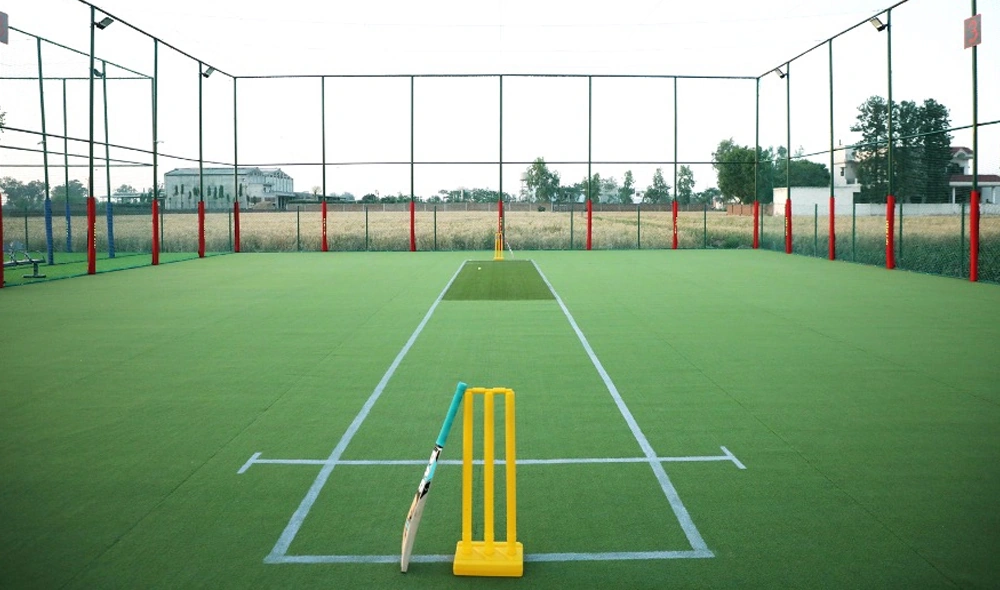
Karmanghat has a different cricket-net requirement from a purely residential colony. The area has schools, compact grounds, coaching corners, rooftop practice spaces, box-cricket style layouts and small open patches near homes. In these sites, a cricket practice net has to protect nearby people and property while still leaving the player enough space to bat, bowl, collect balls and move comfortably.
We plan cricket practice nets in Karmanghat by looking at the real ball path first. A straight drive, a side edge, a lofted shot, a throwdown session and a fast leather-ball hit do not create the same risk. The net height, support method and roof areas served should match the way the lane will be used, not only the length and width of the ground.
Many Karmanghat sites sit near compound walls, parking lines, school movement areas, internal roads or nearby buildings. A neat-looking open space can still need roof netting or side reinforcement if the ball can leave the lane. That is why we ask about ball type, player age, practice frequency, run-up direction, coach position, turf plan and nearby glass before giving the final scope.
Karmanghat cricket net use cases
- School and academy batting lanes with regular student use
- Rooftop cricket practice with side and roof areas served needs
- Box-cricket and compact ground ball-stop netting
- Home, society and coaching practice corners near compound walls
Cricket net survey checks
- Lane length, width, run-up, batting end and coach movement
- Side impact, end impact, lofted-shot risk and ball retrieval
- Wall, cable, post, pole or frame support possibilities
- Nearby glass, parking, roads, school paths and roof direction