We provide safety netting and bird-control work for apartments, independent homes, offices, schools and sports spaces across Hyderabad.
Our work includes balcony safety nets, children safety nets, pigeon nets, anti bird nets, duct area nets, invisible grills, sports nets and turf-related practice areas.
We keep the process simple: visit the property, understand the opening, measure carefully and install the right material for the space.
We Provide
Measured installation
Material choice based on usage
Clean fitting around railings and walls
Service across Hyderabad branches
What Customers Say
Good quality work with careful fixing and a fair explanation before starting.
Moideen
Hyderabad
The team worked neatly and completed the safety net work as discussed.
Divya
Hyderabad
Our balconies and windows were covered properly. The work was neat and on time.
Sudeer
Hyderabad
They explained the process clearly and completed the balcony work without much supervision.
Chinna
Hyderabad
How we plan safety net work
Before any work is suggested, we look at the opening, surface, access and daily use. A balcony, duct, staircase void, terrace edge or sports enclosure can each need a different fixing method.
Price matters, but it should come after measurement and material choice are clear. A useful estimate explains what is included, what is excluded and what may change after seeing the property.
Two similar-looking openings can still need different work because side gaps, railing depth, loose plaster, pipe routes and floor height are not the same.
For Hyderabad and nearby-city enquiries, photos of the full opening, rough size and floor level help us understand the job before a visit is planned.
Quick checks
Choose the installer after checking how they measure the opening, explain the material and handle access. A clear quote should make those points easy to understand before work starts.
A lower price is not useful if it leaves side gaps or hides the material grade.
A higher price should explain what is better: material, access safety, frame finish, cable grade, installation time or durability.
Quotes should be compared by measured area and included work, not by one headline rate.
The cleanest-looking job is usually the one that follows existing edges and stays easy to clean.
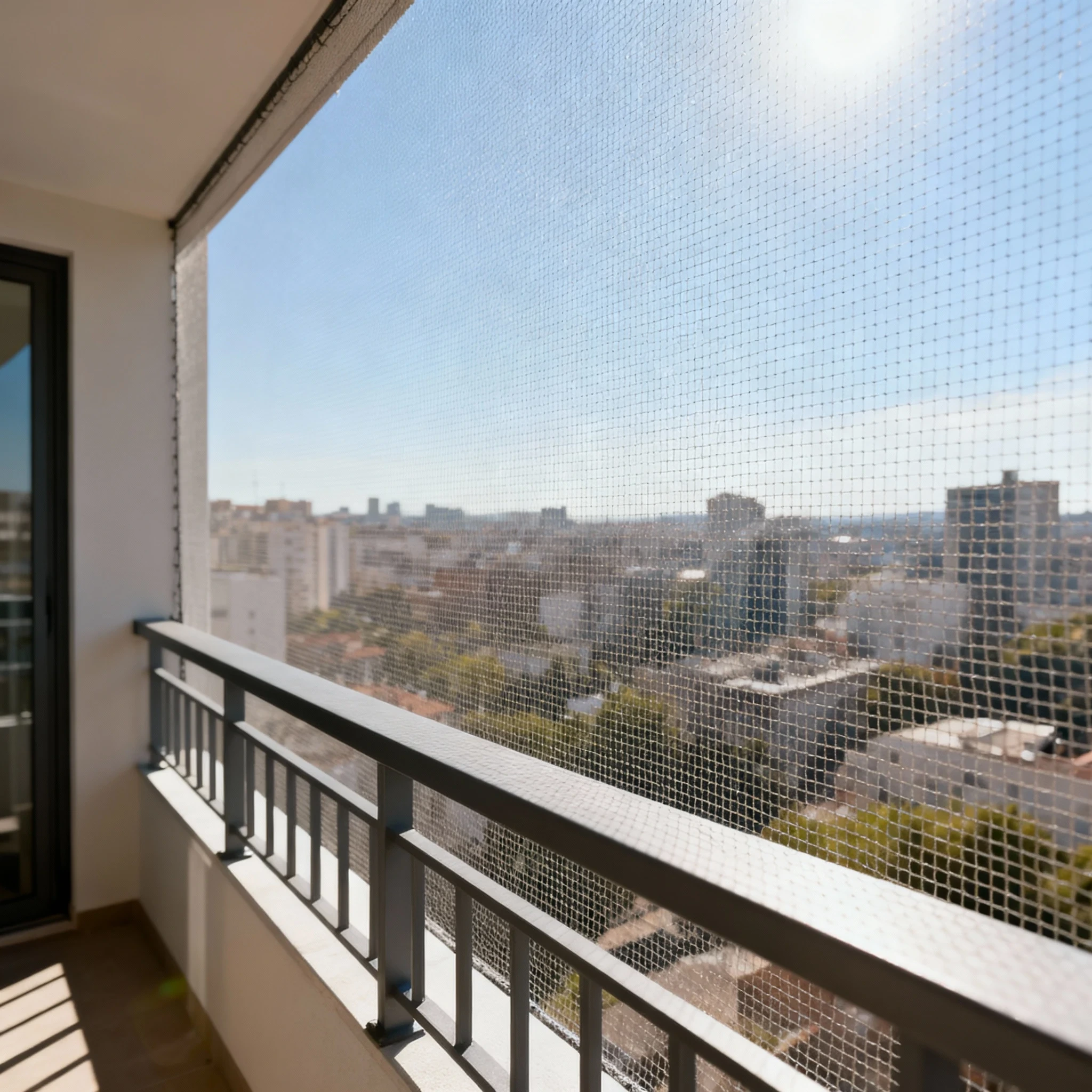
Reference image for comparing material, edge finish and how the work sits inside a real opening.
Checks that prevent messy work
Our work starts with how the space is actually used. A balcony used for drying clothes, a stair void near children and an open duct need different fixing decisions.
Experienced installers look for side returns, reachable gaps, loose plaster, pipe routes and future access before quoting. Those details often decide whether the job feels clean later.
A neat installation should reduce risk without making the space awkward. Doors, windows, clothes lines, cleaning tools and AC access should still make sense after the work.
The first check should focus on the real opening, the daily use and the fixing surface.
Measurement should confirm corners, side gaps, surface strength and access.
The finished work should stay easy to use, clean and inspect.
A low quote is useful only when material, access, support and finishing are still clear.
What should happen before installation
Start by explaining what the space needs: bird control, child safety, pet safety, duct areas served, stairwell protection, sports practice or terrace edge areas served. This helps the installer choose the right material and fixing method.
Photos help, but they should show corners and side gaps, not only the front view. A short video from inside the space can reveal pipe routes, railing depth, door swing and nearby ledges.
A clear estimate should mention measured area, material type, support method, access assumptions and any special work such as cleaning old nesting material, working above parking, fitting around glass or adding top areas served.
Measure the actual opening and note side returns, not only the front face.
Check whether the surface can hold anchors, screws, cable or frame support.
Match material to the purpose: bird control, child safety, sports impact, insect control or worksite protection.
Keep daily use in mind, including cleaning, door movement, clothes drying, vehicle clearance or practice movement.
Confirm how future painting, AC work, plumbing or repair work should be handled.
Price range to discuss before measurement
Public price tables for India usually place standard balcony nets around Rs. 10 to Rs. 30 per sq ft, premium UV-stabilized balcony nets around Rs. 25 to Rs. 50 per sq ft, and open-area or terrace-style netting around Rs. 20 to Rs. 60 per sq ft. Higher floors, return sides, cable support, drilling difficulty and urgent timing can change the final quote.
Usable opening size and side returns.
Height, access and work timing.
Mesh grade and purpose.
Support rope, cable or frame requirement.
Number of corners and obstacles.
Surface strength for anchors.
Treat these numbers as discussion ranges, not a final quote. The estimate should mention material, measured area, access condition, installation method and anything excluded.
Why quotes can differ
Price ranges make sense only when the job type is clear. Two safety-net jobs can price differently when height, side returns, fixing strength or access changes.
Straight balcony work: compare mesh grade, support rope, drilling line and whether side returns are included.
Staircase, duct or parking work: quote by shape and access, because measured area alone does not explain the labour.
Children, pet or animal-facing openings: discuss pull points, reachable gaps and stronger support before choosing the lowest rate.
How customers usually describe the job
Apartment balcony netting with clothes-drying and cleaning access kept in mind.
Bird-control netting for ducts, ledges and service areas.
Child or pet safety netting for railings, windows and stair gaps.
Sports and practice-area netting where impact and height matter.
A measured quote based on photos, rough size, floor level and access.
Why location still matters
Coastal or high-rainfall work in Visakhapatnam (Vizag), Chennai, Kerala and Coimbatore needs more attention to weather exposure, corrosion and aftercare.
Apartment-heavy places such as Bangalore, Hyderabad, Secunderabad, Mysore and Pune often need attention to lift access, society timing, floor height, parking rules and neat finishing.
In Vijayawada, Rajahmundry, Ongole, Eluru, Tirupati and Warangal, many jobs come from independent homes, schools, small buildings and terraces, so the building type matters more than the city name alone.
The first discussion is clearer when the city is shared with photos, rough measurements, floor level and the exact concern.
How to compare options without guessing
For safety-net work, do not compare only the headline rate. Check whether both quotes include the same material grade, access work, support line, finishing, warranty terms if offered, and the same measured area. Also check whether the installer has considered side gaps, outer face access, nearby ledges, door movement, cleaning space and future repair needs.
Questions worth asking before choosing an installer
What should be measured besides width and height?
Side returns, railing shape, slab depth, pipe routes, cleaning access and fixing surface strength should be checked before deciding the final line.
Can the space still be used normally after netting?
It should be planned that way. Clothes lines, window movement, walking space, door swing and cleaning access should be discussed before fitting. Photos or a property visit make the quote easier to compare.
Why do two similar balconies get different quotes?
Height, access, side openings, mesh grade, drilling difficulty and cable support can differ even when the visible balcony size looks similar.
What is a warning sign in a very low quote?
A quote that does not mention material, fixing method, measured area or access condition may be difficult to compare fairly. Photos or a property visit make the quote easier to compare.
What should be checked after other repair work?
Painting, railing repair, AC work and plumbing can loosen or cut the net line. The finished work should be checked again after such changes.